What Museum Visitors Actually Want
A practical guide to interactive technology that increases engagement
Museum visitors come with different expectations than they did even five years ago. They prefer personalization, accessibility, and experiences that extend beyond the gallery walls.
“The best museum kiosks aren’t about being cutting-edge. They’re about being useful.”
At the same time, museums face real constraints: limited budgets, stretched staff capacity, and the challenge of deepening learning in an age of short attention spans.
Museum kiosks—when designed thoughtfully—solve real problems. They increase engagement time at exhibits, deepen visitor understanding, and extend reach to remote audiences.
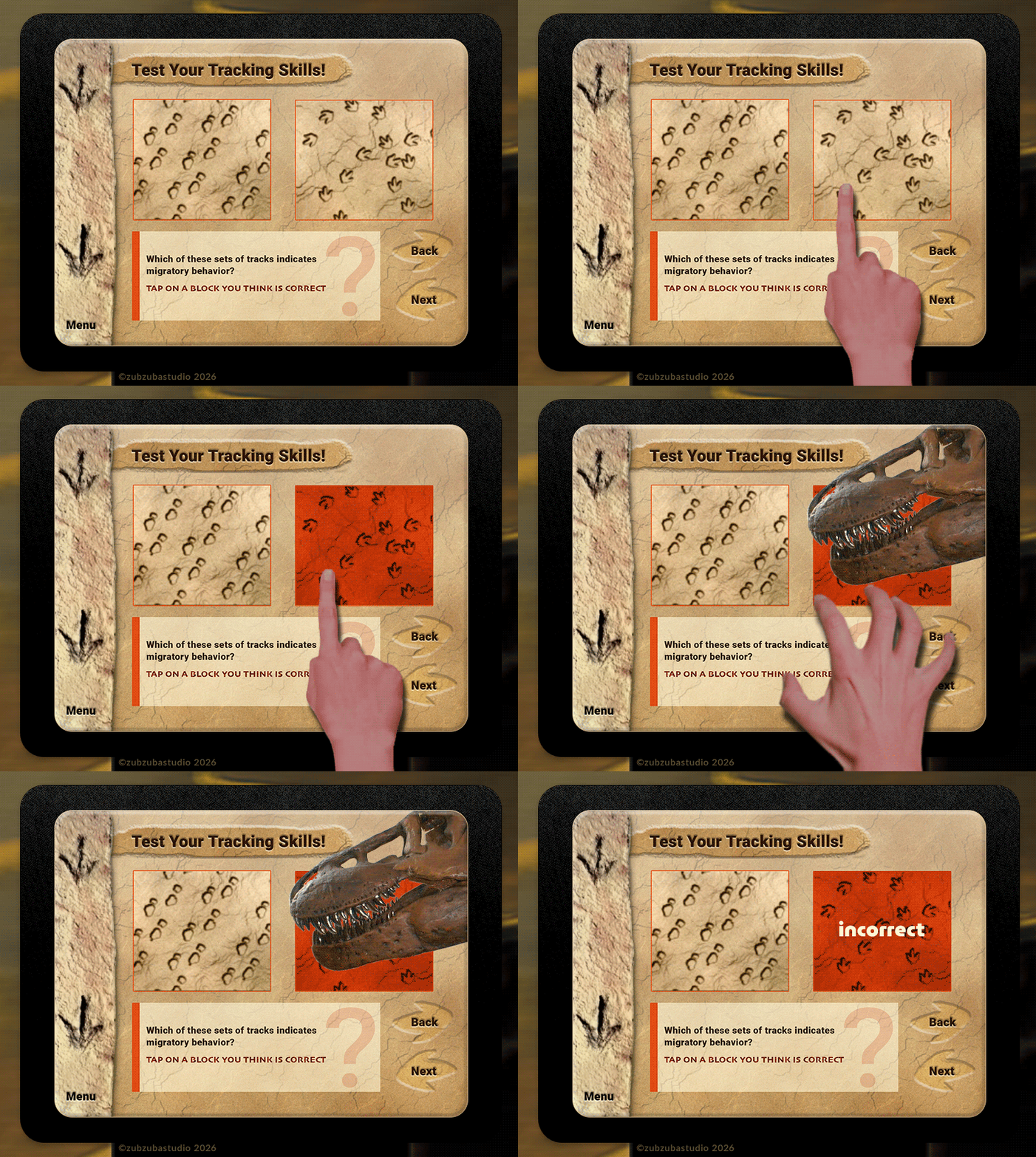
Take our Dinosaur Track Interactive Quiz as an example. Rather than just reading about paleontology, visitors actively engage with it. They're not learning about paleontology; they're doing paleontology, and with a fun twist.
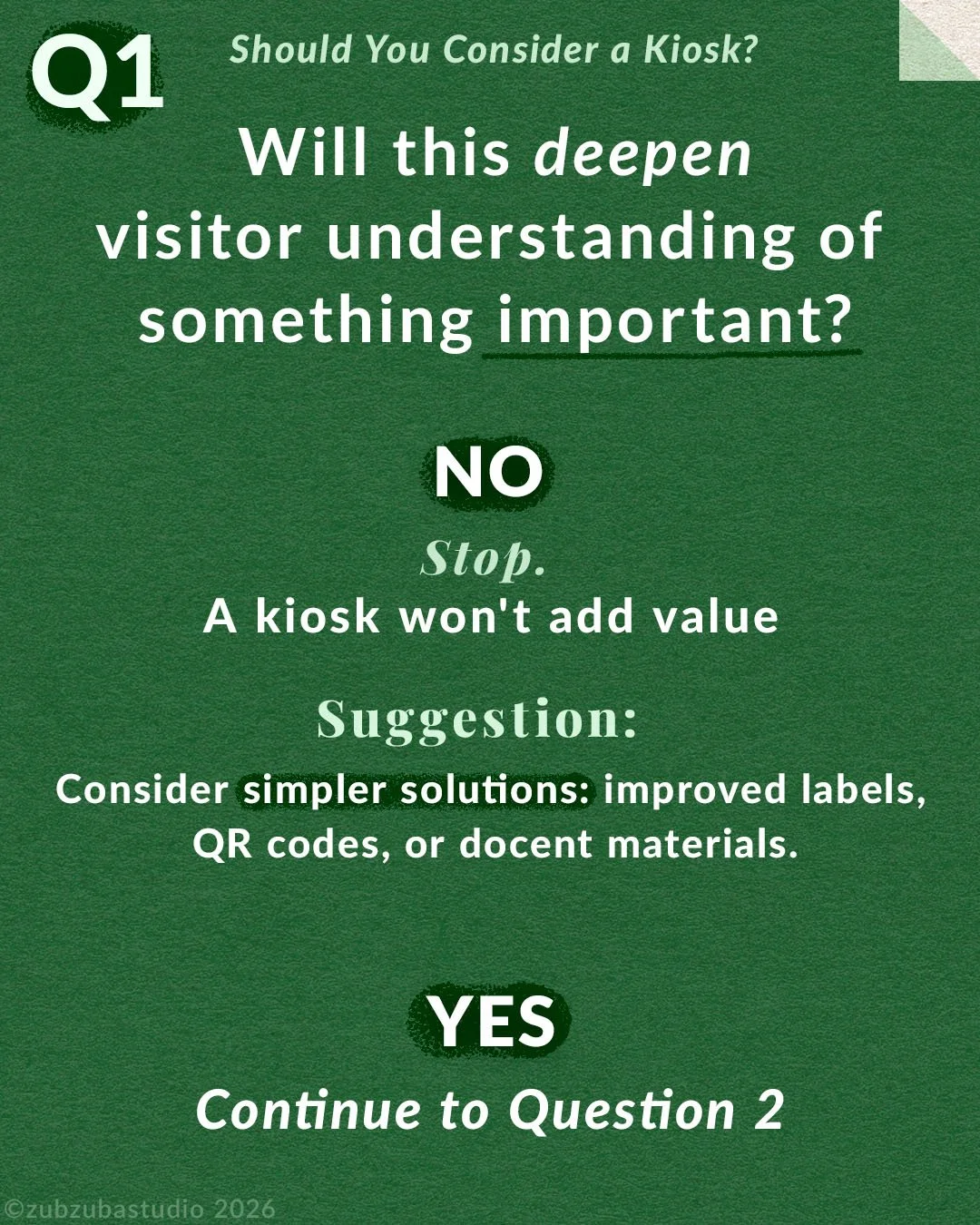
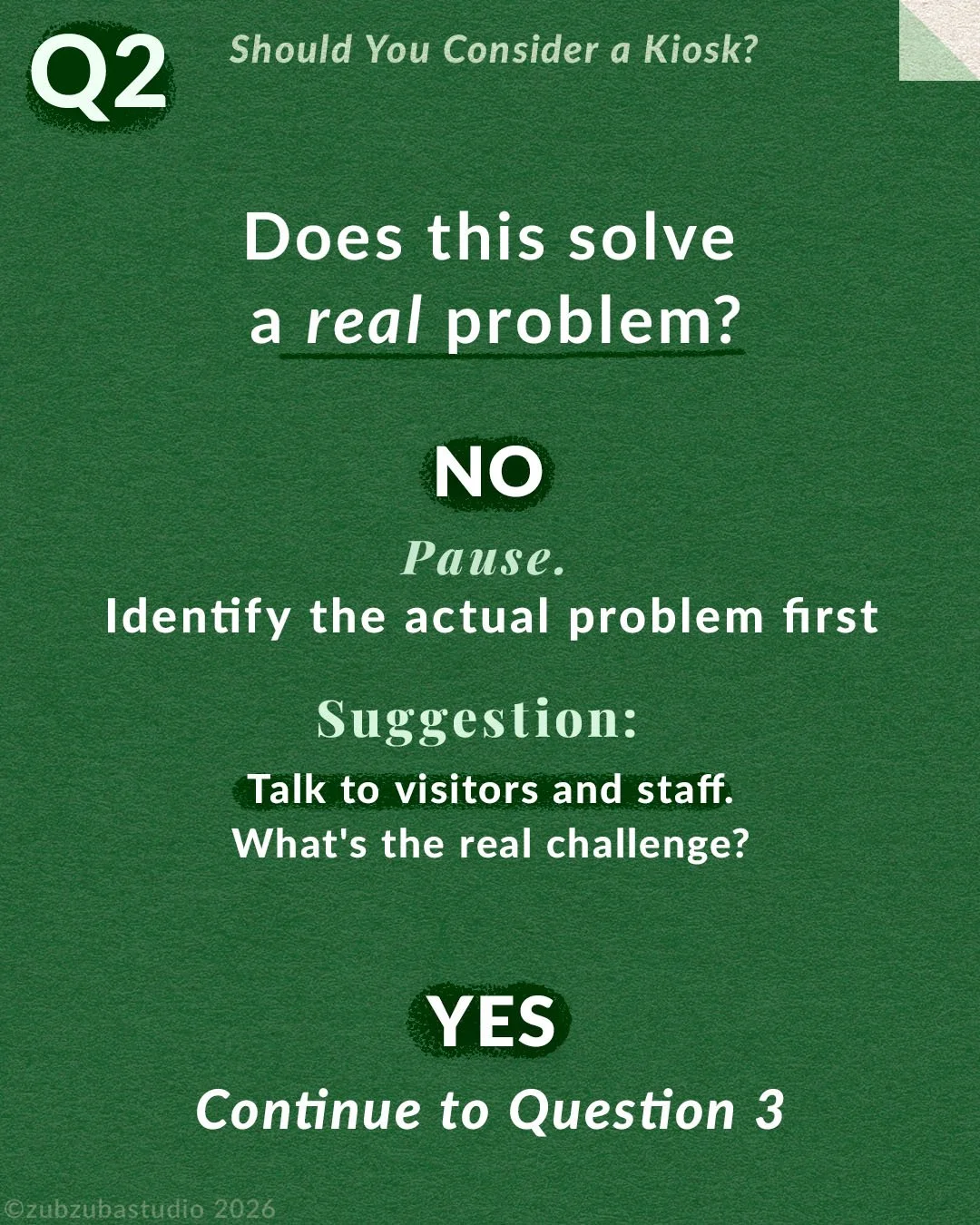
The Investment Question: Should You Consider a Kiosk?
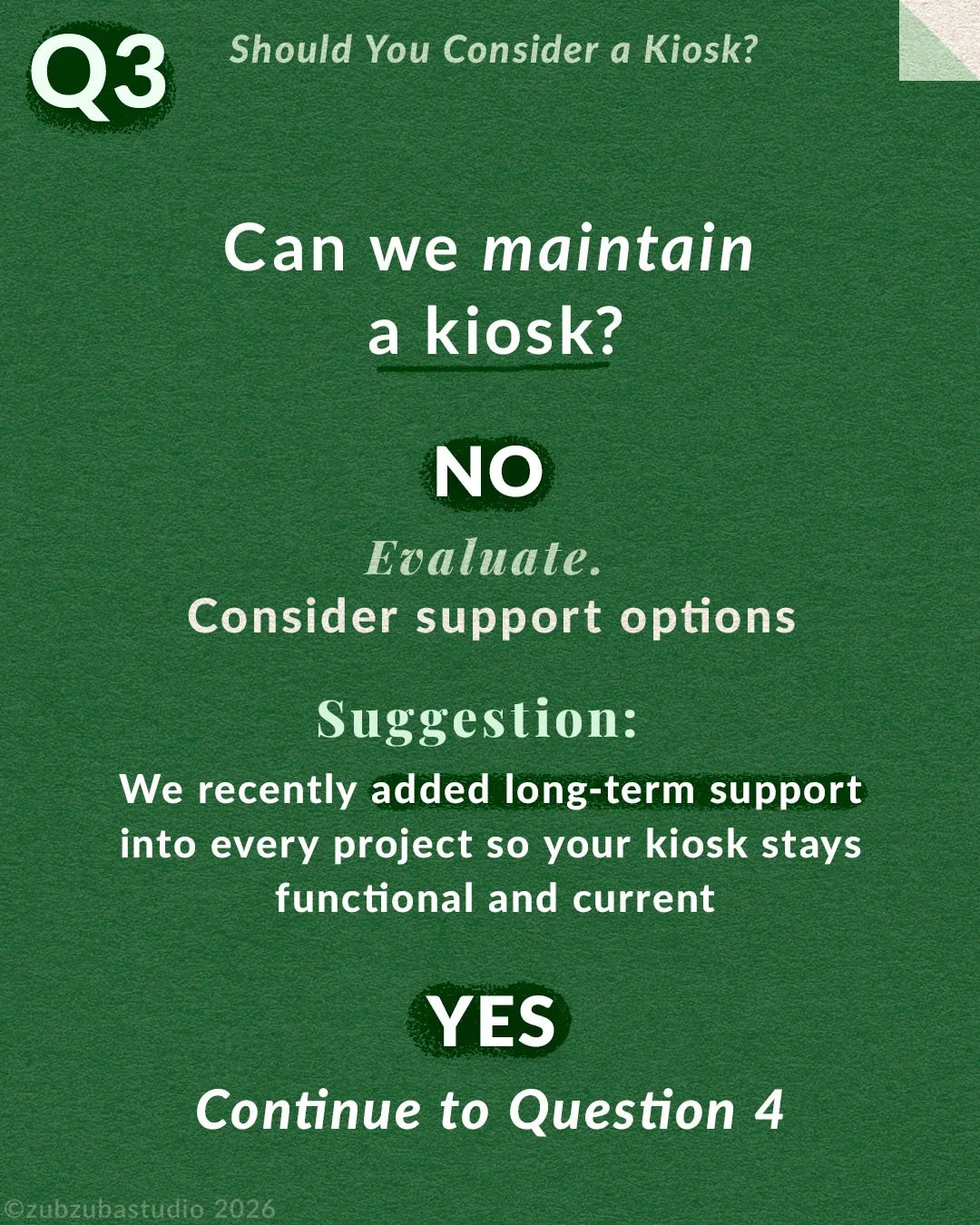
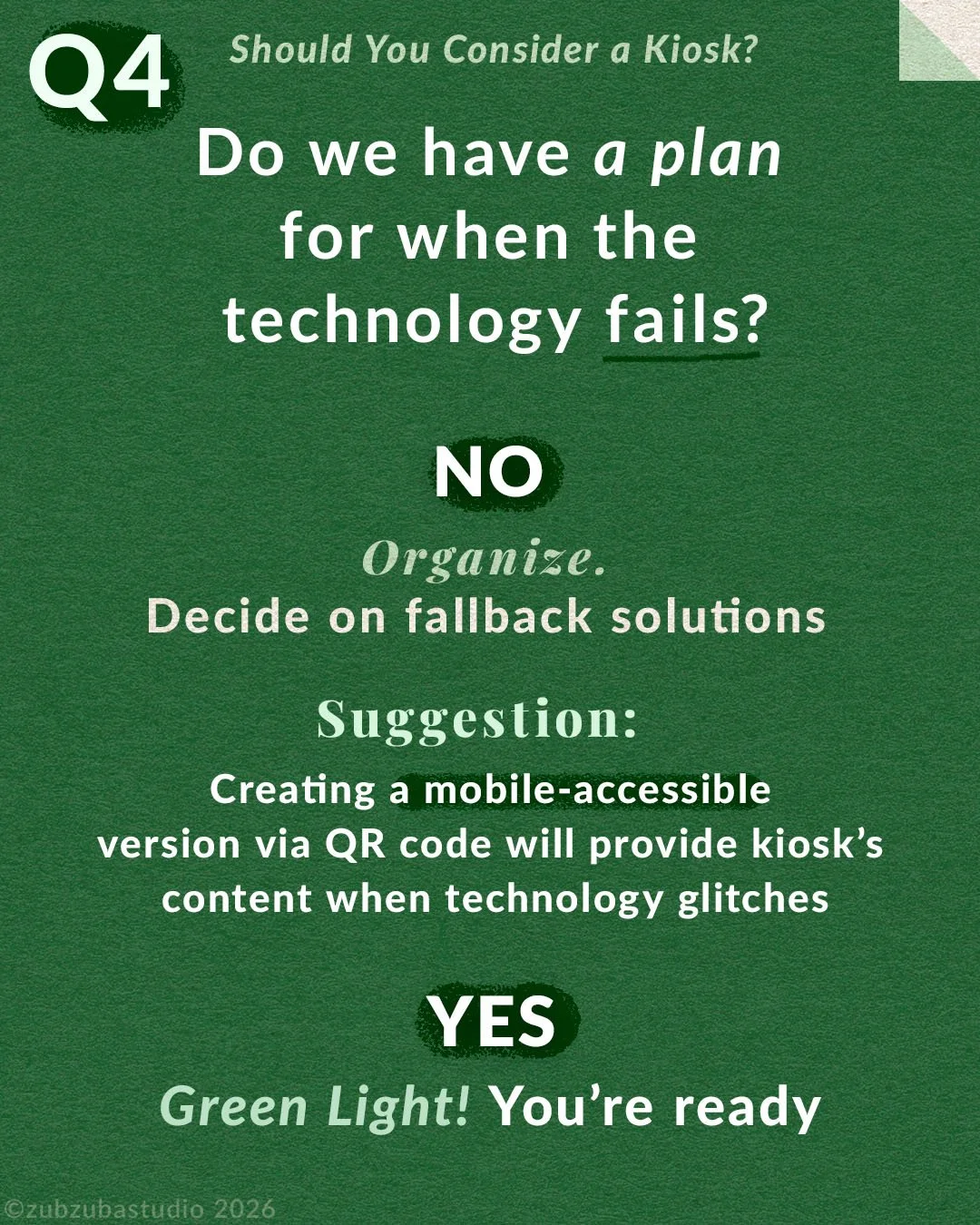

It's worth understanding what drives visitor behavior:
Having a Choice.
They want to choose their own path through your museum, spend time on what genuinely interests them, and skip past what doesn't. A well-designed kiosk respects this preference by offering different entry points to view information.
Feeling Welcome.
This includes visitors with disabilities, families with young children, and people unfamiliar with technology. Accessibility isn't optional—it's foundational to a good visitor experience.
Engaging in Exploration.
A noteworthy artifact means more when visitors understand its story, its maker, its impact. Kiosks let you provide that context in the moment, without requiring staff to repeat the same explanation 100 times daily.
In this example, we created a kiosk showcasing items from the surrounding exhibit. We used the museum's existing illustration to create fun animated videos. This is one of three videos we created for the kiosk.
Personalization That Respects Your Visitors
Not all visitors want the same experience. A curator might spend 20 minutes at a single artifact; a family with young children might want a 90-second highlight tour.
Offer visitors a quick preference question at entry ("Are you here for a deep dive or a quick overview?") and adjust content accordingly.
Provide curated tour paths, like "Best of Modern Textiles," "Hidden Gems," "STEM for Families".
Suggest personalized recommendations based on their chosen interests.
Accessibility Prioritized
Museums that prioritize accessibility don't just expand their audience—they often discover that accessibility features improve the experience for everyone:
High-contrast modes and adjustable text serve visitors with visual impairments, but also work in glare-heavy gallery spaces.
Multiple language options with culturally relevant explanations reach diverse audiences.
Transcripts and closed captions benefit deaf and hard-of-hearing visitors, plus anyone in noisy galleries.
Extending the Museum Beyond Your Walls
Your most engaged visitors want to continue learning after they leave:
QR codes and mobile integration let visitors save highlights, access deeper resources, or receive follow-up materials.
Virtual tours open your collection to students, international audiences, and people with mobility constraints who can't visit in person.
Post-visit materials reinforce what visitors learned, strengthening retention well after they leave.
These ideas work best in combination.
What’s Next
The future of museum kiosks is bright—but only if they're designed with genuine understanding of what visitors need and what curators can realistically support.
If you're ready to explore how kiosks might enhance your institution, we'd love to talk about your specific goals and challenges.
Whether you need to update outdated media, expand existing materials, or create entirely new animated interactive experiences, we work with budgets of all sizes.